
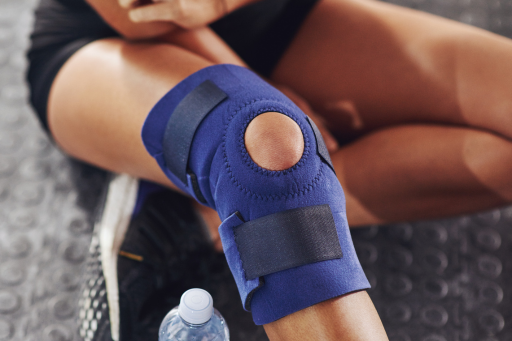
Knee braces are commonly used to provide support, stability, compression, and controlled movement around the knee. Depending on the design, a brace may help reduce stress on certain structures, limit unwanted movement, or make everyday activities more comfortable.
However, the benefits of a knee brace depend on the type of brace and the underlying knee problem. A brace is not a universal solution for knee pain and should not automatically replace physiotherapy, exercise, rehabilitation, or other recommended medical treatment. A physiotherapist or healthcare professional can help determine whether a brace is appropriate for your condition.
What is a Knee Brace?
A knee brace is a wearable support designed to stabilize and protect the knee joint. It may be made from materials such as elastic fabric, foam, plastic, or metal and can include straps, hinges, or other structural components.
Depending on its design, a knee brace can:
- Provide external support to an unstable or weakened knee
- Limit excessive or unwanted movement
- Help control the range of motion
- Provide compression around the joint
- Redistribute pressure across certain areas of the knee
- Support the knee during injury recovery or rehabilitation
A knee sleeve is generally a flexible, elastic support that provides light compression and warmth. It is different from a structured knee brace, which may include hinges, rigid supports, or straps to provide greater stability.
The right type of knee brace depends on factors such as the location and severity of pain, the affected structures, the person’s activity level, and whether the knee is recovering from an injury or surgery.
What Are the Benefits of Wearing a Knee Brace?
The knee brace benefits vary from person to person. When the appropriate brace is correctly fitted and used for the right reason, it may provide several forms of support.
Provides Knee Stability
One of the main benefits of a knee brace is additional stability. A brace can provide external support when the muscles or structures surrounding the knee are weakened or when the joint feels unstable.
Certain hinged and functional braces can help limit excessive movement in particular directions while still allowing controlled knee motion.
Helps Reduce Knee Pain
Some knee braces may help reduce discomfort by supporting the joint, limiting aggravating movements, or redistributing pressure.
For example, an unloader brace may shift pressure away from an affected compartment of an arthritic knee. Compression sleeves may also provide support and compression that some people find helpful for mild pain or stiffness.
Helps Control Swelling
Compression is another potential benefit of wearing a knee brace or sleeve. A properly fitted compression support can apply gentle pressure around the knee, which may help manage mild swelling and provide a supported feeling during activity.
Compression should never be so tight that it causes numbness, tingling, significant discomfort, or circulation problems.
Supports Injured Ligaments
Functional or hinged braces may be used following certain ligament injuries, including injuries involving the ACL, MCL, or LCL.
These braces can provide additional medial and lateral support and help restrict excessive movement while the knee recovers. The appropriate brace and duration of use depend on the specific injury and rehabilitation plan.
Improves Confidence During Movement
A knee that feels unstable can make walking, exercising, or returning to sport feel uncertain. Additional external support may help some people feel more secure when moving.
This increased confidence does not necessarily mean that the knee has fully recovered. Strength, balance, coordination, and movement control remain important parts of rehabilitation.
Protects the Knee During Recovery
Some knee braces are designed to restrict movement during specific stages of recovery. Immobilizers, for example, may be recommended when limiting knee movement is necessary.
After surgery or a significant injury, the healthcare professional managing your recovery should determine whether a brace is appropriate and how it should be used. Not every surgical procedure requires a brace.
May Improve Daily Function
The right knee support may make activities such as walking, standing, climbing stairs, or getting up from a chair more comfortable for some people.
This is particularly relevant when knee symptoms are affecting everyday mobility. However, the brace should address the underlying problem rather than simply mask symptoms.
Helps Manage Certain Arthritis Symptoms
A knee brace may be useful for some people with knee arthritis. Unloader knee braces are specifically designed to redistribute pressure away from an affected part of the knee and are commonly recommended for certain cases of knee arthritis.
The appropriate brace depends on where arthritis is located and how severely it affects the knee. Exercise and physiotherapy remain important components of arthritis management.
Provides Support During Sports and Exercise
Some athletes use knee braces when returning to sports following an injury or when additional support has been recommended by a healthcare professional.
A knee brace for running may provide support or confidence for certain individuals, but wearing a brace does not guarantee injury prevention. Evidence does not show that braces can prevent every type of knee injury, so strengthening, movement training, proper technique, and gradual return to activity remain important.
How Does a Knee Brace Work?
Different knee braces work in different ways. Depending on the design, a brace may:
Stabilize the Knee
A brace can provide external support around the knee, helping the joint feel more secure during movement.
Limit Excessive Movement
Some braces restrict movement that could place additional stress on an injured or vulnerable structure.
Provide Compression
Compression sleeves and some soft braces apply gentle pressure around the knee. This can provide support and may help manage mild swelling.
Redistribute Pressure
Unloader braces can shift pressure away from a specific area of the knee. This mechanism is particularly relevant for certain patterns of knee arthritis.
Support Injured Structures
A structured brace can provide additional support to tissues affected by certain ligament, kneecap, or other knee injuries.
Improve Proprioceptive Feedback
Wearing a brace can increase sensory feedback around the knee. This may help a person become more aware of the position and movement of the joint.
Control Range of Motion
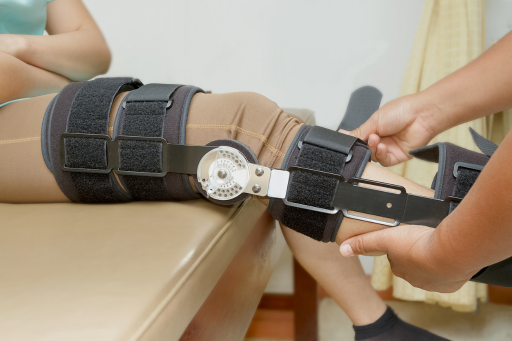
Some braces include hinges or adjustable stops that limit how far the knee can bend or straighten. This can be useful when controlled movement is part of a rehabilitation plan.
Types of Knee Braces and Their Benefits
Different knee braces are designed for different purposes. Choosing the right one is important because a brace that works well for one condition may not be appropriate for another.
Compression Knee Sleeves
Compression knee sleeves are made from flexible, elastic materials that fit closely around the knee.
Best suited for:
- Mild support
- Compression
- Everyday activities
- Mild discomfort or stiffness
- Some people who want additional support during exercise
A sleeve generally provides less structural support than a hinged or functional brace.
Hinged Knee Braces
Hinged knee braces include hinges along the sides of the knee to provide additional stability while allowing controlled movement.
They may be used for:
- Certain ligament injuries
- Knee instability
- Medial and lateral support
- Rehabilitation following selected knee injuries
A hinged brace should be selected and fitted according to the person’s specific condition.
Patellar Knee Braces
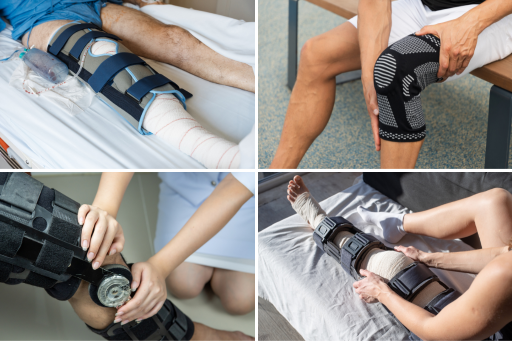
Patellar or patellofemoral braces are designed to support the kneecap and may help guide or stabilize patellar movement.
They can be considered for certain patellar tracking problems, kneecap instability, or patellofemoral pain. The cause of symptoms should be assessed before selecting this type of brace.
Unloader Knee Braces
Unloader braces are designed to redistribute pressure within the knee. They are commonly used for certain cases of knee arthritis, particularly when arthritis predominantly affects one compartment of the joint.
For example, an unloader brace may reduce pressure on the more affected side of the knee by shifting some of the load toward the other side.
Knee Immobilizers
Knee immobilizers are more rigid supports designed to significantly restrict knee movement.
They may be recommended during specific stages of recovery when limiting movement is medically appropriate, including after certain injuries or procedures.
Because prolonged or unnecessary immobilization can affect mobility and strength, these braces should be used according to professional guidance.
Functional Knee Braces
Functional knee braces are designed to provide stability while allowing controlled movement. They may be used following certain knee injuries, particularly when additional support is needed during rehabilitation or return to activity.
The specific brace should be matched to the injured structure, stability requirements, and rehabilitation stage.
What Conditions Can Benefit From a Knee Brace?
A knee brace may be considered as part of a broader treatment or rehabilitation plan for several knee conditions, including:
Knee Arthritis
Certain braces, particularly unloader braces, may help redistribute pressure and reduce symptoms in selected people with knee arthritis.
ACL Injuries
Functional or hinged braces may sometimes be recommended following an ACL injury, depending on the treatment plan and the person’s stability and activity needs.
However, braces are not a substitute for appropriate ACL rehabilitation. Evidence also does not support routine knee bracing as a way to prevent ACL injuries.
MCL and LCL Injuries
Hinged braces may provide medial or lateral support following certain collateral ligament injuries. The type and duration of bracing depend on injury severity and healing progress.
Knee Sprains
A knee brace may provide additional support during recovery from some knee sprains, particularly when the joint feels unstable.
Patellar Instability
Certain patellar braces can help support the kneecap and control unwanted patellar movement in appropriate cases.
Patellofemoral Pain
Some people with patellofemoral pain may benefit from a brace or sleeve as part of a broader treatment approach. Treatment should also address strength, movement patterns, activity levels, and other contributing factors.
Tendon-Related Knee Problems
Some knee supports may be useful for selected tendon-related problems, although the appropriate support depends on the specific tendon and underlying cause of symptoms.
Post-Surgical Recovery
Certain braces may be used following knee surgery to control movement or provide stability. However, brace use varies considerably by procedure, so the surgeon or rehabilitation professional should provide specific instructions.
General Knee Instability
People who experience knee buckling, giving way, or instability may benefit from external support in certain situations. However, repeated instability should be assessed to identify the underlying cause.
Who Should Consider Wearing a Knee Brace?
A knee brace may be appropriate for people who:
- Have knee instability
- Are recovering from a knee injury
- Need additional support during rehabilitation
- Have certain types of knee arthritis
- Are returning to activity after an injury
- Have been advised to use a brace by a physiotherapist, physician, or orthopaedic professional
Not everyone with knee pain needs a brace. Because knee symptoms can have many different causes, professional assessment can help determine whether bracing is appropriate and which type may provide the most useful support.
When Should You See a Healthcare Professional?
You should consider professional assessment if you experience:
- Severe or worsening knee pain
- Significant or increasing swelling
- Difficulty or inability to put weight on the leg
- Repeated knee instability or giving way
- A suspected ligament injury
- Knee pain following a significant injury
- Persistent symptoms despite using a knee support
- Numbness, tingling, or changes in circulation while wearing a brace
A healthcare professional can assess the knee, identify potential causes, and recommend appropriate treatment, especially for new or worsening knee pain, severe pain, increasing swelling, numbness, or difficulty moving the knee or leg.
Conclusion
The potential knee brace benefits include improved stability, support, compression, controlled movement, pressure redistribution, and assistance during recovery. However, results vary depending on your condition and the type of brace used.
A compression sleeve may provide mild support, while hinged, functional, unloader, patellar, or immobilizing braces may be appropriate for specific knee conditions. Choosing the right brace is important for effective support and comfort.
A knee brace should not replace Knee physiotherapy, exercise, strengthening, or professional treatment. If you experience knee pain or instability and are unsure which brace is suitable, My Brampton Physio can assess your condition and recommend an appropriate treatment and rehabilitation plan.
About Taruna Garg
Taruna Garg is a licensed and registered physiotherapist with the College of Physiotherapists of Ontario and has been practicing in private practice since 2005. She has completed several postgraduate courses, including Mulligan Concept training for the upper and lower extremities.
With her expertise in manual therapy and individualized exercise programs, Taruna focuses on helping patients improve strength, mobility, stability, and overall function. She takes a patient-centred approach, combining hands-on techniques with personalized rehabilitation strategies to support recovery and help patients safely return to the activities they enjoy.
Frequently Asked Questions
What are the main benefits of wearing a knee brace?
Knee braces can provide stability, support, compression, controlled movement, and pressure redistribution, potentially reducing discomfort and improving confidence during everyday activities or exercise.
Do knee braces help with arthritis?
Yes, certain knee braces can help manage arthritis symptoms by redistributing pressure away from affected areas and providing support during movement.
Can a knee brace help with ligament injuries?
Yes, hinged or functional knee braces can support injured ligaments and limit excessive movement. The appropriate brace depends on the injury and severity.
Can wearing a knee brace prevent injuries?
A knee brace may provide additional support but cannot guarantee injury prevention. Strengthening exercises, proper technique, movement training, and gradual activity remain important.
Can I sleep with a knee brace on?
Whether you should sleep with a knee brace depends on your condition and brace type. Follow your healthcare professional’s recommendations regarding overnight use.
Should a knee brace be tight?
A knee brace should feel snug and secure without causing pain, numbness, tingling, skin irritation, or circulation problems. Excessive tightness requires adjustment.
Can I exercise while wearing a knee brace?
Yes, some people can exercise while wearing a knee brace. However, the brace and activities should be appropriate for your condition and rehabilitation plan.
How Long Should You Wear a Knee Brace?
Wear a knee brace according to your condition and healthcare professional’s recommendations. Some people need support during activities, while others require longer-term use during recovery.
Are Knee Braces Effective?
Knee braces can be effective for certain conditions by providing support, stability, pressure redistribution, or controlled movement. Their effectiveness depends on proper selection, fit, and use.
Can a Knee Brace Replace Physiotherapy?
No, a knee brace should not replace physiotherapy. It can complement rehabilitation, while physiotherapy addresses strength, mobility, balance, movement patterns, and underlying knee problems.